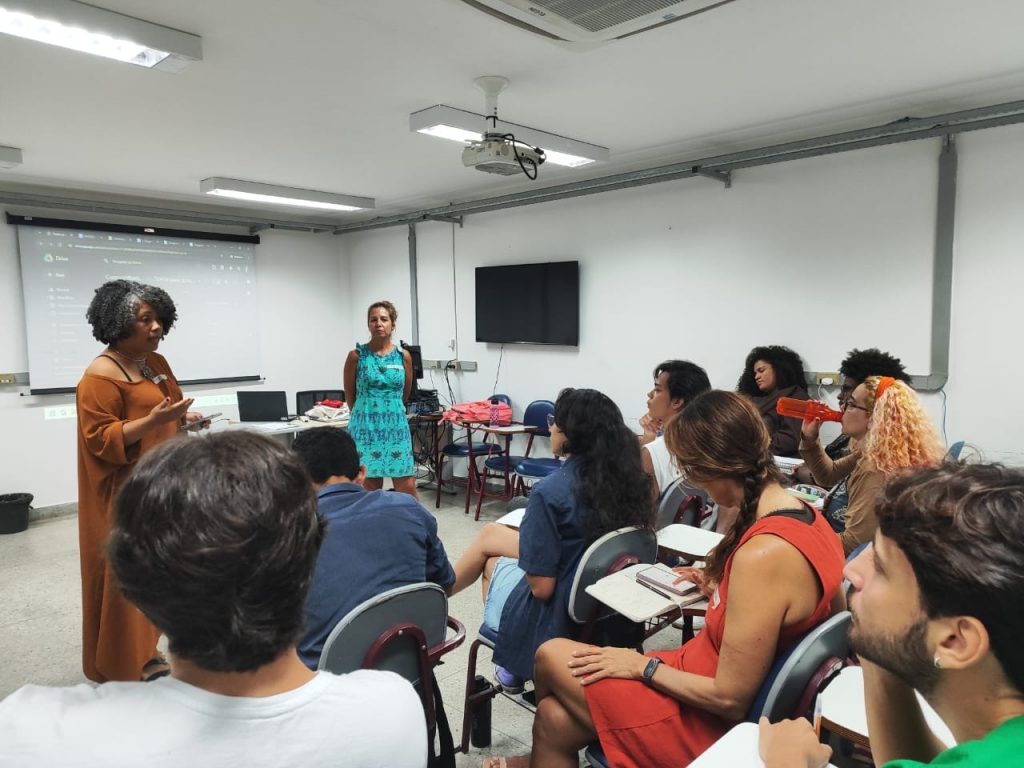
On April 23, 2026, the Participatory Diagnosis Workshop was held, promoted by the Mandala project – Núcleo de Estudos em Agroecologia, bringing together participants interested in understanding and applying methodologies aimed at analyzing social realities in a collective way.
Participatory diagnosis is a tool that seeks to listen directly to people involved in a community or project, allowing needs, challenges and potential to be identified based on the experiences of the subjects themselves. Unlike traditional methods, it values popular knowledge and encourages everyone's active participation in the process.
During the workshop, strategies such as active listening, group dialogue, identification of local problems and priorities were worked on, in addition to the collective construction of solutions. The proposal highlighted the importance of understanding territories from the perspective of those who live in them, making actions more effective and inclusive.
The facilitators were responsible for conducting:
Dr. Joana Vaz Moura, PhD in Political Science and professor at the Institute of Public Policies (IPP/UFRN);
Dr. Sandra Rufino, PhD in Production Engineering and researcher in social innovation at UFRN.
The discussions reinforced the importance of participatory diagnosis as an essential tool for social projects, public policies and agroecology initiatives, as it enables fairer, more inclusive decisions that are aligned with the reality of communities.
The activity also highlighted how this approach strengthens social protagonism, encouraging participants to act as agents of transformation in their own contexts.
